Airline Food: Which Flights Serve Meals, and When
Which airlines still serve free meals in economy, how long a flight has to be to get one, and what you're fed on overnight and red-eye flights.

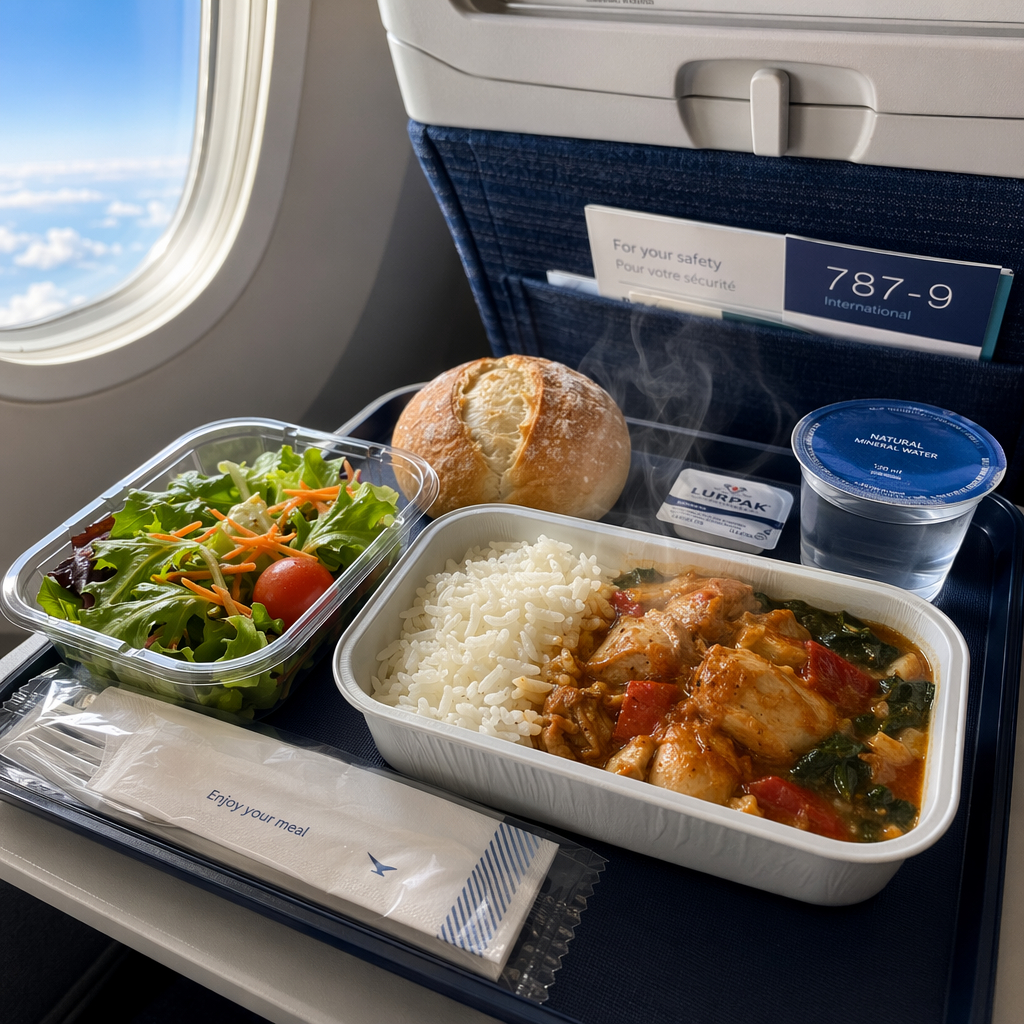
The short answer: most airlines start serving a complimentary meal at around the three-and-a-half to four hour mark, and almost always on international long-haul. Below that, expect a snack on a full-service carrier and nothing free on a low-cost one. The detail — by airline, by route, and on red-eyes — is below.
When flights serve meals, and why
If you fly often, you know the feeling. You’re on the plane and you’re committed to the next several hours in a metal tube. Your main thought—or at least, mine—isn't about turbulence or landing times.
It’s basically: Will they feed me, and when is it coming?
For anyone who gets a little moody when they're hungry, it’s really important to know. You need to know if you should eat a full meal at the airport or save room for whatever the airline is going to be serving.
The good news is that finding out if a meal is served is usually simple. The catch? Pinpointing the exact minute those service carts will rattle down the aisle is tricky.
Let’s unpack the topic of plane food a bit, covering the "if," the "what," and the hard-to-predict "when."
Part 1: The Basics—Am I Eating? (The "If")
The industry follows a few reliable rules that offer your first clues about food service.
1. Flight Length is Key
How long you’re flying is the biggest hint about whether you’ll get a meal.
-
Short-Haul (Under 2.5 hours): Don't count on it. Unless you're in a premium cabin, you’re likely getting a small bag of pretzels and a drink, if anything. Most budget carriers and even major airlines offer only "buy-on-board" options here.
-
Medium-Haul (3 to 5 hours): This is the gray zone. On popular trans-continental routes (like New York to Los Angeles), you might get a complimentary snack box or light meal. On other routes, expect to buy your food.
-
Long-Haul International (6+ hours): Yes, you are almost certainly getting fed. All full-service international carriers give you at least one, and usually two, full complimentary meals (plus snacks) on any flight this long. If the flight is over eight or ten hours, plan on a main meal after takeoff and a second “pre-arrival” meal before landing.
2. The Time of Day Matters
A three-hour flight's service changes a lot based on when you leave. Airlines usually serve something more substantial during typical meal times.
-
Breakfast Flights (Takeoff 5:00 AM - 9:00 AM): Even on shorter runs, you might get a light breakfast item like a muffin or a yogurt cup.
-
Lunch/Dinner Flights (Midday and Evening takeoffs): These flights are the most likely to have a complimentary meal service, especially on cross-country trips.
-
Red-Eye Flights: Service is inconsistent. Some airlines offer a quick dinner after takeoff then dim the lights for sleep, serving a light breakfast 90 minutes before landing. Others skip the first service and only offer a continental breakfast near the end.
How to Check the "If"
-
Your Booking Confirmation: Look for text mentioning "Complimentary Meal Included," "Snack Service," or "Buy-on-Board Available."
-
The Airline’s Website or App: Check the flight details section. Many airlines now post their basic menus online.
-
Recent Traveler Reports: Forums and travel sites sometimes share current information on what service to expect for a specific route.
Part 2: The Core Question—When Will I Eat? (The "When")
You know there’s a meal. Great! The real puzzle is figuring out the best time to eat that airport snack. You don't want to be starving now, but you don't want to be stuffed when the main event arrives.
There's no single, fixed rule for meal timing. It’s influenced by logistics, aviation rules, and the crew’s plan. Here are the best ways to estimate.
1. The Initial Service Window (The 1-Hour Mark)
For shorter international flights (4–6 hours) or the first major meal on a long-haul route, the time is fairly predictable:
Service usually starts 45 to 90 minutes after takeoff.
- The Reason: The crew spends 15–20 minutes after takeoff on safety checks. Then they need time to heat up the food and prep the carts. The goal is to start serving once the plane is stable at cruising altitude and the seatbelt sign has been off for a bit.
2. The Logistics Delay (Waiting in the Back)
"Service starts" and "food is on your tray" are different, especially in Economy on a big plane.
-
The Widebody Effect: On a massive jet, the whole meal service can take over an hour to finish. The crew typically starts at the front and moves back. If you are sitting in the back half of a large aircraft, add 30 to 45 minutes to the service start time before your row is served.
-
Drinks First: On most airlines, the crew will pass through with the drink cart first. Your meal will follow soon after, sometimes with the drink cart, but often not.
3. The Pre-Arrival Service (The 2-Hour Mark)
On flights over six hours, you get a second meal (breakfast, lunch, or dinner, depending on arrival time).
The final meal service typically starts 1.5 to 2 hours before landing.
- The Reason: This timeframe allows the crew to complete the entire service—serving, clearing all trays, and stowing equipment—before the plane begins its final descent, which often starts about 30–45 minutes from the airport.
4. The Unpredictable Factors: Weather and Time
These will mess up any schedule:
-
Turbulence: If the pilot announces moderate turbulence, the meal service will stop instantly. Carts are locked down, and the crew must sit. Once the air smooths out, service restarts, but you could lose 30 to 60 minutes.
-
Time Zone Strategy: Many international airlines time their main meal to align with a local mealtime at the destination. If you leave New York at 10 PM for London, they might skip dinner entirely, get you to sleep fast, and serve a large breakfast a couple of hours before arrival, timed for a mid-morning London meal.
Part 3: Strategy for the Hangry Traveler
The fear of getting hungry while waiting and then being too full when the meal arrives is common. Here are the best methods for navigating the gap:
1. Pack Your Own Backup Snacks
This is the top rule for flying. Do not rely only on the airline. Put stable, easy-to-eat snacks in your carry-on—protein bars, trail mix, or a small sandwich.
- A Solid Tip: Pack enough food for a six-hour delay. This solves the hunger issue and is a lifesaver if a last-minute flight change cuts the meal service.
2. Pre-Order a Special Meal (The Line-Jump)
If you have dietary needs (vegetarian, kosher, gluten-free, etc.), pre-ordering a "Special Meal" is a smart move. The cabin crew must deliver all special meals first to make sure you receive the right tray.
- The Payoff: If you order one, you will almost certainly be served in the first 15–20 minutes of the service period, well ahead of the general cabin.
3. Watch the Crew for Clues
The flight attendants offer the best information on timing.
-
Cabin Prep: If you see the crew come out of the galley, put on their service aprons, and start moving the service carts, the meal is about to begin.
-
The Galley Light: The "kitchen" area lights often brighten before service prep starts. That’s your 15–30 minute notice.
-
The Announcements: Listen for the crew’s opening remarks. They often give a general time: "We plan to begin our dinner service in roughly 45 minutes after we reach our cruising altitude."
4. Observe Premium Class
If you walk past First or Business Class, take note. Premium cabins are nearly always served first with a more involved service.
- Your Time Window: If you see the crew delivering trays to First Class passengers, the Economy service will usually start 30 to 45 minutes later. This gives you a clear moment to decide whether to have that quick protein bar or hold out.
A Final Thought
Flying can feel like a patience test, especially when hunger is involved. Finding out the "if" of meal service is simple, but the exact "when" will always be a variable—a mix of time zones, cabin size, and weather.
The most prepared flyer plans for the worst and hopes for the best. Bring your own snacks, pay attention to the crew, and consider a special meal order if you want to eat sooner.
With this plan, you can relax, enjoy the flight, and leave that impending hunger behind.
Which airlines still include a free economy meal
The short version: Free economy meals are alive and well on long-haul international flights — carriers like Emirates, Qatar, Singapore, and Aer Lingus include hot meals as standard. Among US airlines, free economy meals have largely vanished except on select premium transcontinental routes (American and Delta) and on international flights. Everyone else offers free snacks, a buy-on-board menu, or nothing at all.
The days when every ticket came with a hot tray are long gone, but "no free food" is a myth too. Plenty of airlines still feed you for free — you just have to know which ones, and on which routes. Here's the full breakdown for 2026.
The airlines that still include a free economy meal
Long-haul international carriers. This is where free economy meals are still the norm. If you're flying transatlantic, transpacific, or to the Gulf, expect an included hot meal (often two on the longest routes). The Gulf and Asian carriers — Emirates, Qatar Airways, Singapore Airlines — are the standouts, routinely serving multi-option economy meals with complimentary drinks. European full-service airlines like Aer Lingus include hot meals on their transatlantic routes as well.
US airlines on international routes. American, Delta, and United all serve a free economy meal on their international flights, typically with complimentary beer and wine on top. The meal is more basic than what the Gulf carriers put out, but it's included.
US airlines on select premium transcon routes. This is the one place free economy meals survive domestically:
-
American serves a free Main Cabin meal on flights to and from Hawaii and on JFK to/from Los Angeles, San Francisco, and Orange County.
-
Delta provides a complimentary (cold) meal on its premium coast-to-coast routes such as JFK to Los Angeles, San Francisco, and Seattle — best if you're seated in Delta Comfort.
The snacks-only airlines
These carriers feed you something for free, but not a meal:
-
Southwest hands out complimentary snacks and drinks, but has no meal service at all.
-
JetBlue gives every economy passenger free snacks and drinks — more generous than most — but a full meal is reserved for its transatlantic flights and its premium Mint cabin. Its EatUp boxes on other routes are for purchase.
-
United, American, and Delta all provide free snacks in domestic economy once you're past a distance floor (roughly 300, 250, and 350 miles respectively), then sell fuller food on longer flights.
The buy-on-board airlines
On these, plan to pay or bring your own:
-
Spirit and Frontier charge for everything, including water.
-
Alaska doesn't include a free economy meal but sells well-regarded fresh food on flights of about two to three hours or more.
Free meals in economy: the 2026 comparison
| Airline | Free economy meal? | Where | Free snacks? |
|---|---|---|---|
| Emirates | Yes | All long-haul | Yes |
| Qatar Airways | Yes | All long-haul | Yes |
| Singapore Airlines | Yes | All long-haul | Yes |
| Aer Lingus | Yes | Transatlantic | Yes |
| American | Select only | Hawaii, JFK–LAX/SFO/SNA, all international | Yes, 250+ mi |
| Delta | Select only | Premium transcons, all international | Yes, longer flights |
| United | International only | International routes | Yes, 300+ mi |
| JetBlue | Transatlantic only | Transatlantic + Mint | Yes, all flights |
| Southwest | No | — | Yes |
| Alaska | No (buy-on-board) | — | Yes |
| Spirit / Frontier | No | — | No |
How to check before you book
Airline meal policies change frequently — American and Delta both updated their onboard menus in spring 2026 — so the surest way to know is to check for your exact flight:
-
Open the airline's app or website and pull up your specific flight number.
-
Look for the onboard dining or meal section; most carriers now show what's served on that route.
-
If it's ambiguous, assume you'll need to bring your own and pack accordingly.
When in doubt, our guide to the best healthy snacks to bring on flights will keep you covered regardless of what the cart holds.
One email a week. The gear worth buying and the fares worth booking.
No affiliate padding. If we wouldn't recommend it to a friend, it doesn't go in.
Food on domestic US flights
The short version: On most domestic US flights, a free meal in economy is a thing of the past. What you'll actually get is free snacks and drinks once the flight is past a few hundred miles, plus a buy-on-board menu on longer routes. The rare exceptions are a few premium transcontinental routes where American and Delta still include an economy meal.
If you're flying across the country and hoping for a hot tray, temper your expectations. US airlines phased out free domestic economy meals more than a decade ago. But that doesn't mean you'll go hungry — here's exactly what each major carrier hands out for free versus sells, so you can decide whether to eat at the gate.
The honest answer
Free domestic meals in economy essentially disappeared after the airlines shifted to buy-on-board menus in the 2010s. In 2026, the model across the big US carriers is consistent:
-
Snacks and non-alcoholic drinks are free — but usually only once you're past a distance floor (each airline sets its own, roughly 250–350 miles).
-
Fuller food is buy-on-board on longer flights, typically sandwiches, wraps, and snack boxes in the $8–$14 range.
-
A free economy meal only appears on a handful of premium transcon routes.
The domestic routes that still include a meal
These are the exceptions worth knowing:
-
American Airlines serves a free Main Cabin meal on flights to and from Hawaii, and on JFK to and from Los Angeles, San Francisco, and Orange County (SNA).
-
Delta provides a complimentary cold meal on its premium coast-to-coast routes — think JFK to Los Angeles, San Francisco, and Seattle — with the best version going to Delta Comfort passengers.
Outside of these marquee routes, don't count on a free domestic meal in economy on any US airline.
What each carrier gives you free vs sells
American — Free Biscoff cookies or pretzels and drinks on flights over about 250 miles. Fresh food (sandwiches, snack boxes) is for purchase on flights beyond roughly 1,100 miles; American expanded its buy-on-board lineup in spring 2026.
Delta — Free snacks and drinks on longer flights (Delta raised its service floor to roughly 350 miles in 2026, dropping service on its shortest hops). Its "Flight Fuel" plates run about $14 and appear on flights over 1,500 miles. First Class gets a free hot meal on routes over 900 miles.
United — Free snacks and drinks on flights over about 300 miles, with a buy-on-board menu on longer domestic routes.
Southwest — Free snacks and drinks on all flights, but no meal service and nothing to buy.
JetBlue — The most generous free snack spread in US economy, with unlimited-style snacks and drinks, but full food (EatUp boxes) is for purchase on domestic routes.
Alaska — No free economy meal, but a genuinely good buy-on-board menu on flights of roughly two to three hours or more.
Spirit and Frontier — Everything, including water, is for purchase.
How to eat well anyway (without overpaying)
Buy-on-board food is convenient but pricey and hit-or-miss. The budget-savvy move is to bring your own — it's cheaper, healthier, and guaranteed:
-
Pack from our list of the best healthy snacks to bring on flights.
-
Eat a proper meal before you fly using our pre-travel eating guide so you're not relying on the cart at all.
-
Bring an empty water bottle to fill after security — free water beats paying for it onboard.
Overnight and red-eye flights
The short version: It depends on whether the flight is international or a domestic red-eye. Long-haul overnight international flights serve a full meal shortly after takeoff and usually a lighter breakfast before landing. Domestic red-eyes are much sparser — most serve only snacks and drinks, and some skip fresh food entirely on overnight routes because the airline assumes you'd rather sleep.
Booking an overnight flight raises a practical question: will anyone feed you, and when? Getting this wrong means either boarding hungry or being woken for a meal you didn't want. Here's what to expect and how to plan around it.
What overnight flights typically serve
Overnight service splits cleanly into two categories.
Long-haul international overnight flights run a full meal service. The pattern is almost universal: a hot dinner served within an hour or two of takeoff, the cabin lights dimmed for sleep, and then a lighter breakfast or snack served an hour or so before arrival. On the Gulf and Asian carriers this dinner is genuinely good; on US carriers flying international it's more basic but still included, typically with complimentary wine or beer.
Domestic red-eyes are a different story. These are short enough that airlines prioritize sleep over service. You'll generally get free snacks and drinks, but not a meal — and notably, some carriers deliberately skip fresh food on overnight flights. JetBlue, for example, doesn't offer its fresh EatUp food on overnight flights, reasoning that passengers want to rest, not eat.
The timing: dinner vs pre-arrival
On a long-haul overnight, meal timing is designed around sleep:
-
Dinner comes first, usually 45–90 minutes after takeoff once the seatbelt sign is off.
-
The cabin goes quiet for the middle stretch so people can sleep; the crew won't wake you.
-
A pre-arrival meal — breakfast, a snack, or a light bite — is served roughly an hour before landing, timed to your destination's morning.
If you'd rather sleep straight through than eat, most airlines will let you skip the first meal and let you rest, and many let you request that the crew leave you undisturbed.
Should you eat before boarding a red-eye?
For a domestic red-eye, yes — eat before you board. Since most red-eyes won't serve a meal, the smart move is to have dinner in the terminal or bring something substantial. Our pre-travel eating guide covers what to eat so you sleep well rather than fighting indigestion at altitude, and our best healthy snacks to bring on flights are ideal for an overnight when you don't want anything heavy.
On a long-haul international overnight, you can rely on the included dinner — but a few snacks are still worth packing for the long quiet stretch when service has stopped.
What to pack for an overnight flight
A comfortable overnight comes down to a few essentials:
-
A real meal or filling snacks, especially for a domestic red-eye with no meal service.
-
An empty water bottle to fill after security — staying hydrated matters more on a long overnight, and it beats waiting for the cart.
-
A good travel pillow so you actually sleep through the quiet stretch. See our picks for the best travel pillows.
Eating before you fly
The bags are packed, the tickets are secured, and the car is pulling up to the curb. Just one question before you step out the door: Should you eat?
Many travelers find their stomach is the first part of the body to go against the stress and motion of a journey. This usually leads people to think that skipping a meal will prevent nausea, indigestion, or mid-flight bloat.
But is fasting really the right way towards a comfortable trip? The simple answer is no.
Arriving at the airport with a heavy, greasy meal is not the smartest choice, but deliberately going hungry can be equally problematic.
The Problem With Going Hungry
The belief that an empty stomach prevents motion sickness is appealing—less in your stomach means less potential trouble. The body doesn't cooperate with this logic.
When your stomach is empty, it still generates acid. This acid, when mixed with the disorientation signals that cause motion sickness, may trigger painful heartburn and worsen nausea.
Not to mention, going without food before a trip also drains your energy and focus, which are both needed for navigating airports, unfamiliar roads, or long security lines:
-
Dizziness and Headaches: An empty stomach causes low blood sugar. This can quickly bring on lightheadedness and irritability. The low oxygen and dry air inside an airplane cabin only make these symptoms more severe.
-
Heightened Motion Sickness: A hungry body is already under stress. Adding the movement of a car, train, or plane to this physical tension increases your sensitivity to motion, making you more likely to feel sick.
-
The Junk Food Trap: Delaying food until you are completely famished makes you prone to making an unhealthy, impulsive choice at the first available rest stop or terminal. Salty chips or sugary soda offer a fast burst of energy followed by an immediate crash.
The Science of "The Smart Snack"
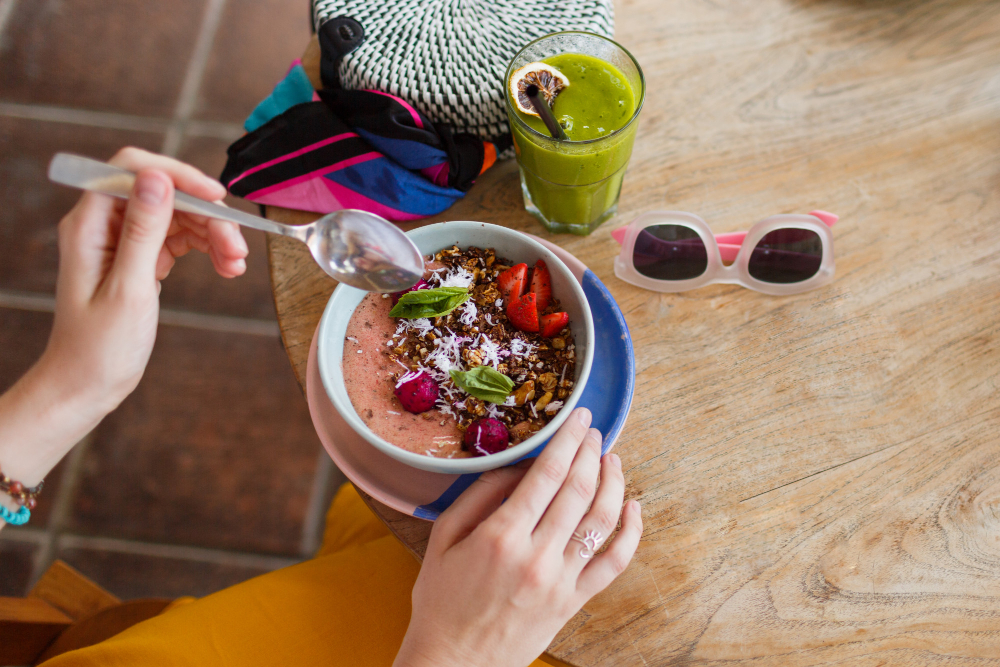
The best strategy is to eat something light, easily digestible meal one to two hours before departure. This gives you sustained energy without overburdening your digestive system.
The discomfort many travelers feel often results from atmospheric pressure changes. When a plane reaches high altitude, the air pressure inside the cabin drops, allowing gases in your digestive tract to swell by as much as 30%.
A heavy, rich, or high-fiber meal creates more gas, which leads directly to bloating and discomfort while you're seated in a confined space.
To prepare for this, choose foods that are bland, simple, and full of nutrients:
| Good Travel Foods | Foods to Pass On |
| Simple Carbohydrates (Oatmeal, whole-grain crackers, toast) | Fried or Greasy Foods (Digestion is slow; they invite indigestion) |
| Bananas (Easy to digest; high in potassium to fight bloat) | Bubbly Drinks (They introduce extra gas into your system) |
| Lean Protein (Hard-boiled egg, plain yogurt) | Gassy Vegetables (Broccoli, beans, high-fiber fare) |
| Ginger (A natural remedy for nausea) | Spicy Foods (Higher risk of heartburn and reflux) |
Hydration, Timing, and Caution
Eating right before traveling is about more than avoiding a stomach ache; it's vital for overall wellness. Keeping a few key principles in mind helps set you up for a smooth journey:
-
Hydration is the Priority: This matters more than food itself. Low humidity on a plane will dehydrate you quickly, leading to fatigue and headaches. Drink water, herbal teas, or coconut water. Cut back significantly on alcohol and caffeine—both pull water from your system.
-
Time it Well: Aim for a small, balanced meal or snack about 90 minutes before you board or start a long drive. This allows your body to start processing food before you settle into your seat.
-
Use Familiar Foods: Select foods you know your body handles with ease. Travel day is not the time to try new, complex, or very rich dishes. Sticking to simple, familiar options helps keep your gut—which already deals with travel stress—running smoothly.
So, Eat Before You Go
You should never travel on a completely empty stomach. Fueling your body correctly provides the steady energy and comfortable digestive environment needed to handle unexpected delays and turbulence. Skip the heavy meals but definitely pack a light snack. Your stomach will be grateful.
FAQ
How long does a flight have to be to get a meal? On most full-service carriers, roughly three and a half to four hours. Shorter than that and you will usually get a snack rather than a tray.
Do domestic US flights include food? In economy, rarely. Snacks and drinks are complimentary on most legacy carriers; an actual meal is generally limited to long transcontinental routes and premium cabins.
Do you get a meal on an overnight flight? On long-haul international, yes — usually dinner after takeoff and a lighter breakfast before landing. On domestic red-eyes, usually not, because airlines prioritise sleep over service.
Should I eat before boarding? For a domestic red-eye, yes. For a long-haul with a confirmed meal service, you can wait.
Can I bring my own food through security? Solid food, yes. Liquids and gels over 100 ml, no — that includes yoghurt, soup and dips.